

- Home
- Sturgeon Textbooks
Sturgeon Textbooks
What is a sturgeon?
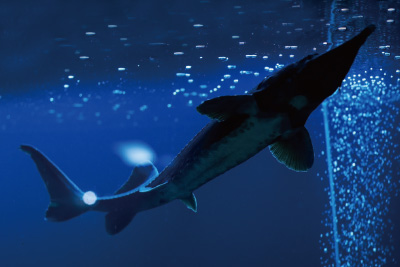
Sturgeon are the world's largest freshwater fish belonging to the sturgeon family.
Unlike sharks (fuka), it also has kidneys and can break down ammonia, giving its meat a refined taste with no odor.
It also combines the DHA and EPA (omega-3 fatty acids) of fish with the anti-fatigue components of chicken and whale, such as carnosine and varenine, making it one of the most nutritious foods attracting attention from athletes and the media.
In Europe, "theroyal fish", in China.emperor fishIt was called "the most beautiful of the world," and was offered to kings and emperors.
It has a history of being called the food of immortality, as many of them live for nearly 100 years.
Ecologically conscious consumption is required to protect the species that has existed for 300 million years and will continue to do so in the future.
Sturgeon in Miyazaki
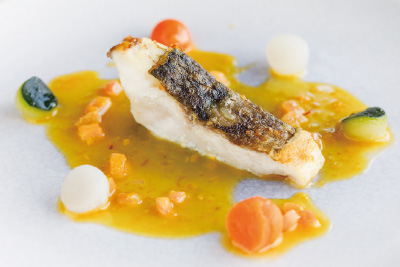
In 2004, Miyazaki Prefecture became the first prefecture in Japan to successfully produce artificial seedlings of "white sturgeon" and established a complete aquaculture technology that does not depend on natural sources.
One of the most important aspects of sturgeon aquaculture is water.
Miyazaki sturgeon, raised in a rich natural environment, is characterized by its high protein content and beautiful clear flesh.
Its noble flavor and firm texture can be likened to the taste of Thai and the texture of puffer fish, and the skin is rich in collagen.
It is highly regarded as an excellent food with high nutritional value that goes well with all kinds of dishes, Japanese, Western, and Chinese.
Eating Supplements
Recent research has shown how nutritionally superior Miyazaki sturgeon is.
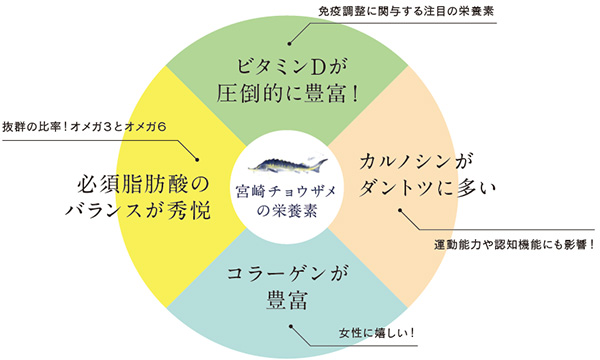
It was a supplement-like food that contained plenty of nutrients that Japanese people have difficulty obtaining on a daily basis. In particular, it is attracting attention from experts as a food rich in vitamin D, which is involved in maintaining the immune system.
Miyazaki Sturgeon for Improved Immunity!

Director, Japan Institute of Functional Medicine
Dr. Kozo Saito
The nutrient that has received the most attention in the age of with coronas is vitamin D. Vitamin D is closely linked to immunity, so much so that some U.S. reports indicate that sufferers have half the risk of severe new coronary infections.
However, vitamin D is produced in the skin through exposure to sunlight, and since few foods are abundant in vitamin D, 80% of Japanese who guard against UV rays too much are deficient.
Adults can reach the sufficiency range by taking 50 µg (2000 IU) per day.
Among sturgeon, Miyazaki sturgeon has by far the highest vitamin D content, and it is calculated that 100 g of sturgeon can meet the daily requirement. It is also low in toxic heavy metals, making it ideal for children's nutritional intake.
*About vitamin D units
Currently, the µg (microgram) is the usual unit of weight in Japan, but the IU (International Unit) is also used as a unit of potency.
IU is a unit used for fat-soluble vitamins, especially vitamin D.
For vitamin D: 1 IU = 0.025 µg, 1 µg = 40 IU
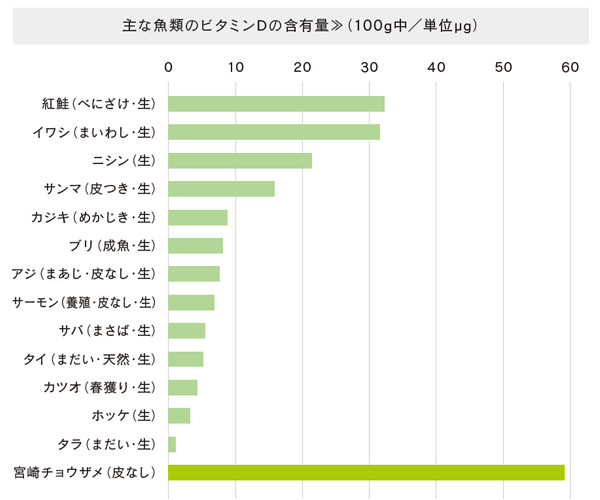
To maintain good health, experts recommend a daily intake of 50 µg (2000 IU) of vitamin D. However, few foods are rich in vitamin D. Even Japanese sardines and sockeye salmon, which are considered to have the highest content among the foods we eat on a daily basis, require 300 g per day. In this respect, Miyazaki sturgeon can be consumed with only 100g.
Vitamin D content of fish (other than Miyazaki sturgeon) is extracted from the "Standard Tables of Food Composition in Japan" (2020 edition, 8th revision) by the Ministry of Education, Culture, Sports, Science and Technology.
*The intake of vitamin D
According to the Dietary Reference Intakes for Japanese (2020) by the Ministry of Health, Labour and Welfare, the recommended daily intake (not the amount required to maintain good health) is 8.5 µg/day (340 IU) for adults.
Miyazaki sturgeon can meet that amount with only 20 grams. Incidentally, the Japanese Osteoporosis Society's "Guidelines for the Prevention and Treatment of Osteoporosis (2015 Edition)" states that the required amount of vitamin D is 10 to 20 μg (400 to 800 IU) per day.
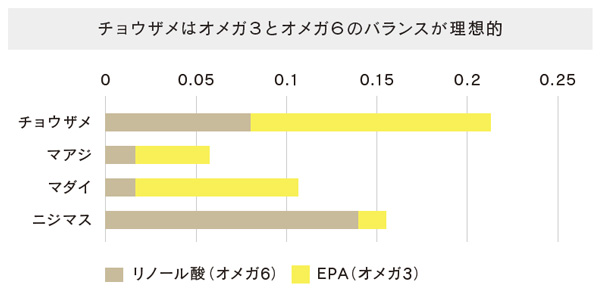
Fats and oils that cannot be synthesized in the body and must be obtained from food are called "essential fatty acids.
There are two types of essential fatty acids, omega-3 fatty acids and omega-6 fatty acids, and in recent years there have been whispers that too much omega-6 fatty acids are being consumed.
Omega-6 fatty acids are the kind of oil that enters the mouth without saying a word, and because of their inflammatory effects, too much of them is thought to promote allergies and other inflammatory diseases.
Omega-3 fatty acids, on the other hand, have been found to have the opposite effect, directly inhibiting inflammation.
This is why foods high in omega-3 fatty acids are attracting so much attention.
And the content ratio of omega-3:omega-6 is important.
As in sturgeon, a 2:1 balance with high omega-3 fatty acids is very ideal.
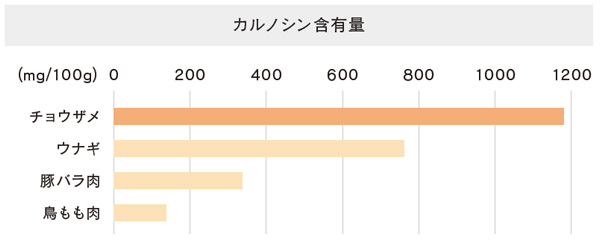
Carnosine is found in the breast meat of migratory birds and migratory fish such as tuna and bonito.
Because it is also involved in athletic performance such as human endurance and instantaneous force, it is often found in applications used by athletes.
In recent years, the relationship with cognitive function has also become clearer.
Miyazaki sturgeon, due to its unique diet, also has a significantly higher carnosine content than other fish.
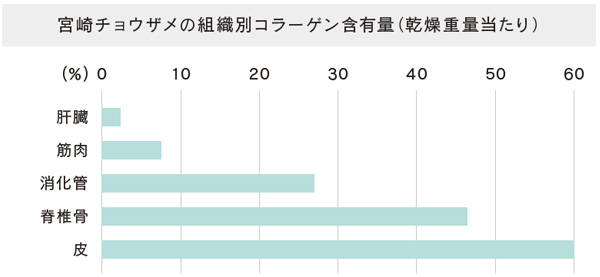
Data also show that Miyazaki sturgeon is rich in collagen.
Collagen is abundant in the skin of fish, and sturgeon is no exception.
More than 60% of the skin is collagen.
Don't throw away the crunchy skin.
Sturgeon is said to have "nothing to throw away," and the whole fish can be enjoyed as a whole: the middle bone can be fried, the entrails and gills can be used for tempura, and the head can be used for soup.
I want to eat it every day! Sturgeon Cuisine
Sturgeon is rich in nutrients. The white meat is light and unctuous, and can be used in a wide repertoire of dishes in both Japanese and Western cuisines.
We encourage you to incorporate it into your daily diet for the sake of beauty and health.
-
Sturgeon Battera Lightly sprinkle salt on the fillets, let sit for 30 minutes, and then wash with amazu (sweet vinegar). Place the fish on top of sushi rice, roll it up using a sushi mat, and finally top with white kombu (kelp) to give it flavor.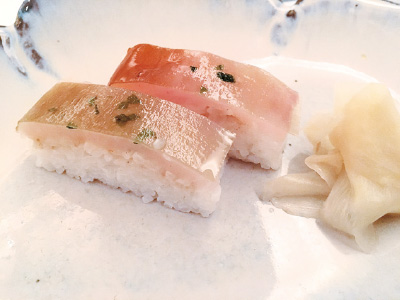 01
01
-
Smoked sturgeon Line a pan with foil chips, place a net on top of the foil chips, and place the fillets on the net. Cover and heat over high heat. When it starts to smoke, reduce the heat to medium-low and cook for 10 minutes.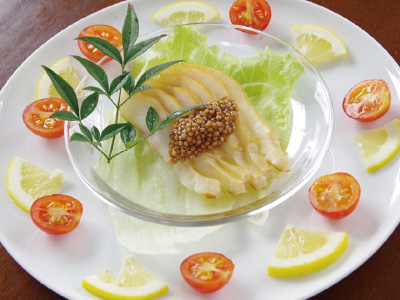 02
02
-
Fried sturgeon After salting and peppering the fillets, bread crumbs are coated all over and deep fried in oil until golden brown. The recommended topping is tartar sauce.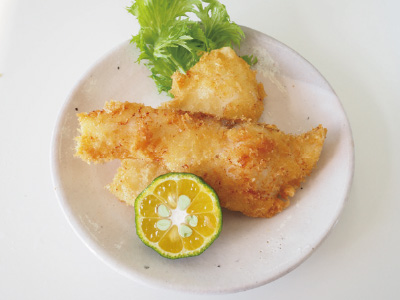 03
03
-
Baked sturgeon with sakekasu (sake lees) Salt the fillets and leave them for 20 minutes, then marinate them for a while in sake lees softened with sake and sugar, and grill them slowly over medium heat.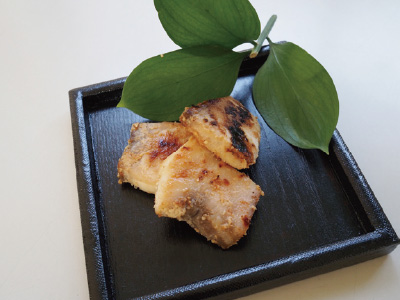 04
04
-
Sturgeon marinated in soy sauce Cut into bite-sized pieces, coat with potato starch and deep-fry in oil. Marinate in vinegar with shredded vegetables and let sit for a while to let the flavors blend.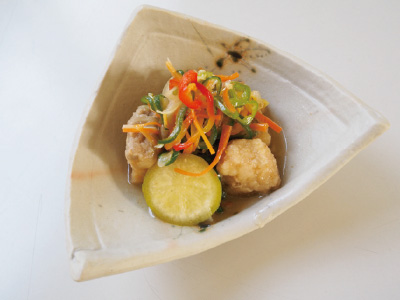 05
05
-
sturgeon hamburger A hamburger kneaded with sturgeon, onions, egg whites and ginger. Enjoy the flavors of brightly colored vegetables and charred butter as garnish.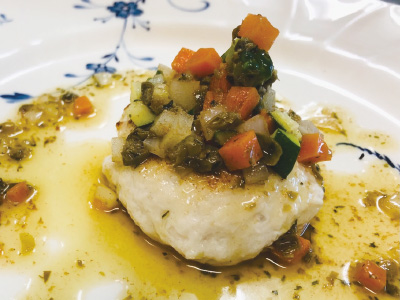 06
06
Professional Voices
Sturgeon cuisine by a chef from a top Miyazaki restaurant.
Through the skills of skilled professionals, the dishes bring out the charm and characteristics of the ingredients, giving them a deep flavor that is different from that of home cooking.
To support many athletes through food
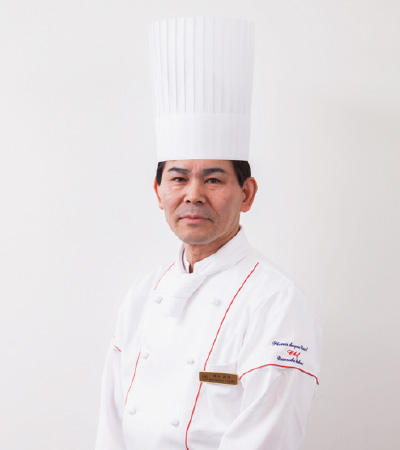
Sheraton Grande Ocean Resort
Masanobu Fukamizu Executive Chef
Sturgeon fish meat is one of the ingredients that we want to actively use for ethical reasons, as well as for its quality, taste, and nutritional value.
It is an indispensable ingredient for supporting the many athletes who come to Sportsland Miyazaki through food.
-
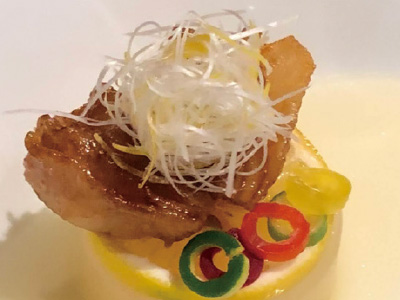 simmered radish and sturgeon in teriyaki sauce
Sturgeon bones full of collagen are grilled to make broth, which is then used to cook daikon radish. The sturgeon is deep-fried and simmered in teriyaki oil and finished with Nichinan lemon, yuzu, and other citrus fruits and white onions.
simmered radish and sturgeon in teriyaki sauce
Sturgeon bones full of collagen are grilled to make broth, which is then used to cook daikon radish. The sturgeon is deep-fried and simmered in teriyaki oil and finished with Nichinan lemon, yuzu, and other citrus fruits and white onions.
-
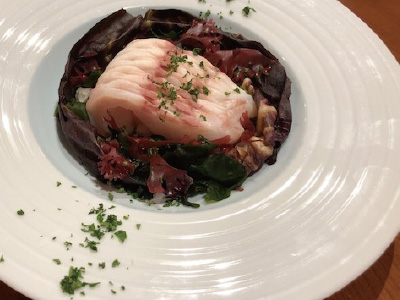 Sturgeon steamed with seaweed
Steaming with a knife cut into the skin makes the fish plump and fluffy. The broth from the steaming process is also used as a sauce to enhance the flavor of the sturgeon.
Sturgeon steamed with seaweed
Steaming with a knife cut into the skin makes the fish plump and fluffy. The broth from the steaming process is also used as a sauce to enhance the flavor of the sturgeon.
Foods that increase in umami as they age
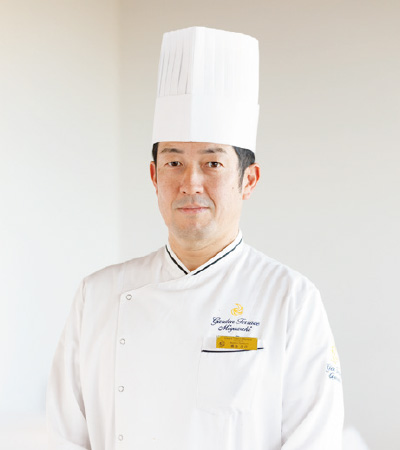
Garden Terrace Miyazaki Hotel & Resort Restaurant Forest
Chef Masahiro Hashikura
Sturgeon is an easy-to-use ingredient, not only for caviar, but also for the fish meat itself, which is light, has no small bones, and gains umami as it matures.
The fact that it contains many nutrients such as collagen, DHA and EPA is also an attractive feature.
-
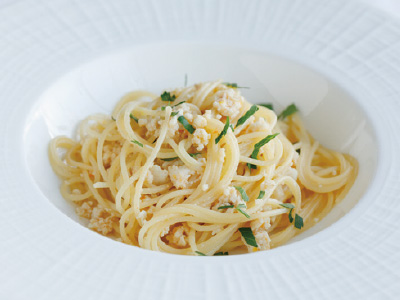 Sturgeon Ragout
Rich in sturgeon cartilage, which is rich in collagen, this pasta sauce is rich in flavor with the sweetness of vegetables and the texture of sturgeon cartilage.
Sturgeon Ragout
Rich in sturgeon cartilage, which is rich in collagen, this pasta sauce is rich in flavor with the sweetness of vegetables and the texture of sturgeon cartilage.
*Good as a soup as well as a pasta sauce. -
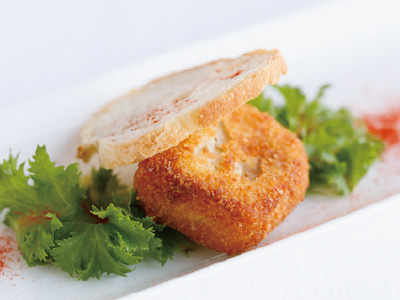 Sturgeon Brandado
A brandade originally made with cod is now made with sturgeon. It is baked savory and mixed with milk, garlic, and potatoes to make a brandade that contains a lot of collagen.
Sturgeon Brandado
A brandade originally made with cod is now made with sturgeon. It is baked savory and mixed with milk, garlic, and potatoes to make a brandade that contains a lot of collagen.